
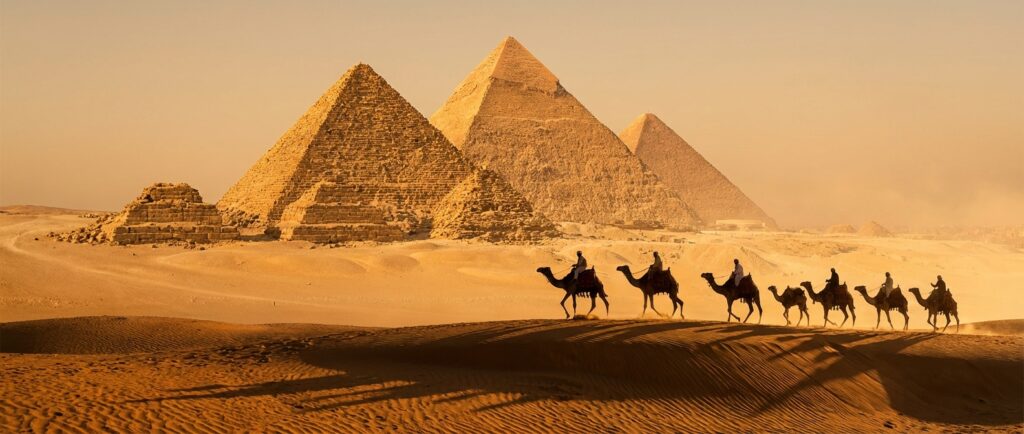
Ancient Egypt doesn’t feel like a place you simply visit—it feels like a civilization you step into. One moment you’re in the present; the next, you’re tracing the same horizon where pyramids have stood for thousands of years, watching the desert light shift across stone that has outlasted empires, languages, and entire ways of life. An Ancient Egypt tour is more than a checklist of famous landmarks. It’s a journey into a world shaped by pharaohs, carved by master builders, and guided by beliefs that turned death into an art form and the Nile into a sacred lifeline. From the iconic silhouettes of Giza to temple corridors etched with hieroglyphs, Egypt invites you to look closer—because the real wonder isn’t only what survives, but how much is still being discovered. Whether you’re drawn by the grandeur of the pyramids, the myths surrounding the Sphinx, or the enduring mysteries historians still debate today, this is a trip that delivers both awe and perspective. Few destinations make history feel this immediate—and few experiences stay with you as long.
Why Ancient Egypt Still Fascinates the World
Ancient Egypt holds a unique place in human history because it feels both distant and strangely familiar at the same time. While thousands of years separate us from the age of the pharaohs, their world was built around ideas that still resonate today—power, legacy, faith, and the desire to be remembered. Few civilizations managed to turn these abstract concepts into stone on such a monumental scale.
What sets Egypt apart is the sheer ambition of its vision. The pyramids were not only tombs but statements of cosmic order, designed to mirror the heavens and ensure eternal life. Temples were more than places of worship; they were carefully planned spaces where politics, religion, and daily life intersected. Even ordinary objects, from amulets to wall reliefs, carried symbolic meaning that reflected a deeply structured worldview.
Another reason for Egypt’s lasting appeal is how much remains unknown. Despite decades of archaeological research, new chambers, artifacts, and interpretations continue to emerge. Each discovery challenges previous assumptions and reminds us that ancient Egypt is not a closed chapter, but an ongoing story still being written.
For travelers, this combination of grandeur, symbolism, and mystery creates a rare sense of connection across time. Standing before structures that have survived for millennia naturally raises questions about human ingenuity and ambition—questions that make ancient Egypt endlessly fascinating, no matter how many times its story is told.
The Pyramids of Giza – Timeless Wonders of the Ancient World
Rising from the edge of the desert, the Pyramids of Giza are more than Egypt’s most recognizable symbols—they are enduring testaments to human ambition and precision. Built over 4,500 years ago, these structures continue to dominate the landscape of Cairo and the imagination of visitors from around the world. Their scale alone inspires awe, but it is the combination of engineering skill, astronomical alignment, and cultural meaning that makes them truly extraordinary.
The Giza plateau was designed as a carefully planned necropolis, reflecting ancient Egyptian beliefs about the afterlife and the divine nature of kingship. Every stone, passageway, and orientation carried purpose. Even today, with modern technology at our disposal, the pyramids challenge assumptions about what ancient civilizations were capable of achieving.
The Great Pyramid of Khufu: Engineering Beyond Its Time
The Great Pyramid of Khufu is the largest and most complex of the three pyramids at Giza—and the only surviving wonder of the ancient world. Originally standing at around 146 meters, it was the tallest man-made structure on Earth for nearly four millennia. Constructed from millions of limestone blocks, some weighing several tons, it showcases a level of logistical coordination and mathematical knowledge that continues to puzzle researchers.
What makes Khufu’s pyramid especially remarkable is its precision. The sides are aligned almost perfectly with the cardinal directions, and the internal chambers reveal a sophisticated understanding of weight distribution and structural stability. These features suggest not only technical mastery, but a deep connection between architecture, astronomy, and belief.
The Great Sphinx of Giza and the Legends That Surround It
Guarding the pyramids stands the Great Sphinx, a monumental limestone statue with the body of a lion and the head of a pharaoh. Eroded by time and weather, the Sphinx has inspired myths, legends, and speculation for centuries. Some see it as a symbol of royal power; others view it as a guardian of sacred knowledge hidden beneath the sands.
Despite extensive study, many questions remain unanswered—its original appearance, its precise purpose, and even the identity of the ruler it represents are still debated. This air of uncertainty only adds to the Sphinx’s allure, reinforcing the sense that Giza is not merely a historical site, but a place where mystery and monumentality coexist.
A Journey Along the Nile – The Lifeline of Ancient Civilization
No river in the world is as closely tied to the rise of a civilization as the Nile is to ancient Egypt. Flowing through the heart of the country, it provided water, fertile soil, and a natural route for trade and communication. Without the Nile’s predictable annual flooding, the great cities, temples, and monuments of Egypt would never have existed. For the ancient Egyptians, the river was not just a resource—it was a divine force that sustained life itself.
Traveling along the Nile today offers a unique perspective on how geography shaped history. The contrast between the narrow green ribbon of farmland and the surrounding desert remains as striking as it was thousands of years ago. This natural setting helps explain why temples and settlements were built where they were, and why the river became central to Egyptian religion, mythology, and daily life.
Luxor: The World’s Greatest Open-Air Museum
Modern Luxor stands on the ruins of ancient Thebes, once the political and religious capital of Egypt. The city is home to some of the most impressive archaeological sites in the world, including the vast Karnak Temple complex and the elegant Luxor Temple, both covered in detailed reliefs and towering columns. Across the Nile lies the Valley of the Kings, where pharaohs were buried in richly decorated tombs hidden deep within the cliffs.
Walking through Luxor feels less like visiting a single attraction and more like moving through layers of history. Every avenue, courtyard, and wall tells a story of power, ritual, and artistic achievement, making the city a highlight of any Ancient Egypt tour.
Aswan and Abu Simbel: Monuments of Power and Devotion
Further south, Aswan introduces a calmer rhythm and a different architectural style, shaped by Nubian influences and the granite quarries that supplied stone for many of Egypt’s greatest monuments. Nearby, the temples of Abu Simbel stand as one of the most dramatic expressions of royal authority. Carved directly into a mountainside, these colossal statues of Ramses II were designed to impress both gods and visitors.
The modern relocation of Abu Simbel in the 1960s, to save it from flooding caused by the Aswan High Dam, adds a contemporary chapter to its story. It serves as a reminder that preserving ancient Egypt is an ongoing effort—one that connects past ingenuity with modern determination.
Ancient Egyptian Mysteries That Still Puzzle Historians
Despite centuries of research, ancient Egypt continues to resist simple explanations. One of the most debated questions remains how the pyramids were built with such precision using tools that appear rudimentary by modern standards. The transportation and placement of massive stone blocks, the mathematical accuracy of the structures, and their alignment with celestial bodies all suggest a level of knowledge that historians are still trying to fully understand.
Another enduring mystery lies beneath the surface—literally. Hidden chambers, sealed shafts, and unexplored passages continue to be discovered using modern scanning technologies. Each finding sparks new theories and, often, more questions than answers. Rather than closing the book on Egypt’s past, archaeology repeatedly reveals how much remains concealed.
Symbolism adds another layer of intrigue. Hieroglyphs, temple layouts, and religious imagery were never purely decorative; they encoded complex ideas about time, order, and the universe. Interpreting these symbols requires not only linguistic skill but also cultural context, which is why interpretations evolve as new evidence comes to light.
For travelers, engaging with these mysteries transforms an Ancient Egypt tour into something far deeper than sightseeing. Experiencing these sites with historical context and expert guidance allows visitors to explore Egypt not as a finished story, but as a living puzzle—one that continues to inspire curiosity and debate. Thoughtfully designed journeys, such as those offered by https://archaeologicalpaths.com, focus precisely on this dimension, connecting monuments with the unanswered questions that make ancient Egypt endlessly compelling.
What to Expect from a Modern Ancient Egypt Tour
A modern Ancient Egypt tour combines deep historical insight with the comfort and structure today’s travelers expect. While the monuments themselves remain timeless, the way they are explored has evolved significantly. Professional guides—often trained Egyptologists—provide context that transforms temples and tombs from impressive ruins into meaningful narratives about power, belief, and daily life in antiquity.
Well-designed itineraries balance iconic landmarks with lesser-known sites, allowing travelers to experience Egypt beyond the most photographed locations. Visits to major highlights such as Giza, Luxor, and Abu Simbel are typically complemented by quieter moments along the Nile, local museums, or smaller archaeological areas that add depth to the journey. This approach helps avoid the feeling of rushing from one attraction to another.
Comfort and logistics also play a key role. Transportation, accommodations, and entry access are usually arranged in advance, removing common travel stressors. Nile cruises, in particular, offer a relaxed way to move between historical sites while enjoying views that have remained largely unchanged since ancient times.
Most importantly, a modern tour emphasizes understanding rather than spectacle. Instead of simply seeing monuments, travelers are encouraged to engage with the historical questions, cultural context, and ongoing discoveries that continue to shape our knowledge of ancient Egypt—making the experience both educational and deeply memorable.
Best Time to Visit Egypt for History and Culture Enthusiasts
Choosing the right time to visit Egypt can significantly shape the overall experience, especially for travelers focused on history and cultural exploration. The most comfortable period typically falls between October and April, when daytime temperatures are milder and walking through expansive archaeological sites is far more pleasant. During these months, exploring places like Giza, Luxor, or the temples along the Nile can be done without the intense heat that dominates the summer season.
Winter months, particularly December and January, are popular due to favorable weather, but they also bring higher visitor numbers to major landmarks. For those who prefer a quieter atmosphere, late autumn and early spring often strike the best balance between climate and crowd levels. These periods allow for unhurried visits and better opportunities to absorb the details carved into temple walls or painted inside tombs.
Summer, from May to September, presents a different challenge. While temperatures can be extreme—especially in Upper Egypt—this season offers fewer tourists and, in some cases, more flexible access to sites. With careful planning and early-morning visits, even this period can appeal to travelers who value solitude and are comfortable adapting to the heat.
Ultimately, the best time to visit Egypt depends on personal preferences, but thoughtful timing ensures that the focus remains on discovery, reflection, and meaningful engagement with one of the world’s most extraordinary ancient civilizations.
Why an Ancient Egypt Tour Is a Once-in-a-Lifetime Experience
An Ancient Egypt tour is not simply about visiting famous landmarks—it is about encountering a civilization that shaped human history in ways still felt today. Few places offer such a powerful sense of continuity, where monuments thousands of years old continue to define the landscape and provoke questions about human ambition, belief, and ingenuity. Standing before temples, tombs, and pyramids creates a rare awareness of time, reminding travelers how small moments fit into a much larger historical story.
What makes this journey truly exceptional is the depth it offers. Beyond iconic sights, Egypt invites reflection and curiosity, encouraging visitors to look beyond surfaces and explore meaning, symbolism, and unanswered questions. With thoughtful planning and knowledgeable guidance, the experience becomes immersive rather than observational—less about seeing, more about understanding.
For those seeking a historically grounded and enriching way to explore this ancient world, carefully curated journeys such as those found at https://archaeologicalpaths.com provide an opportunity to connect monuments, landscapes, and mysteries into a coherent narrative. Long after the journey ends, the impressions left by ancient Egypt tend to linger—making it not just a destination, but a lasting experience.